
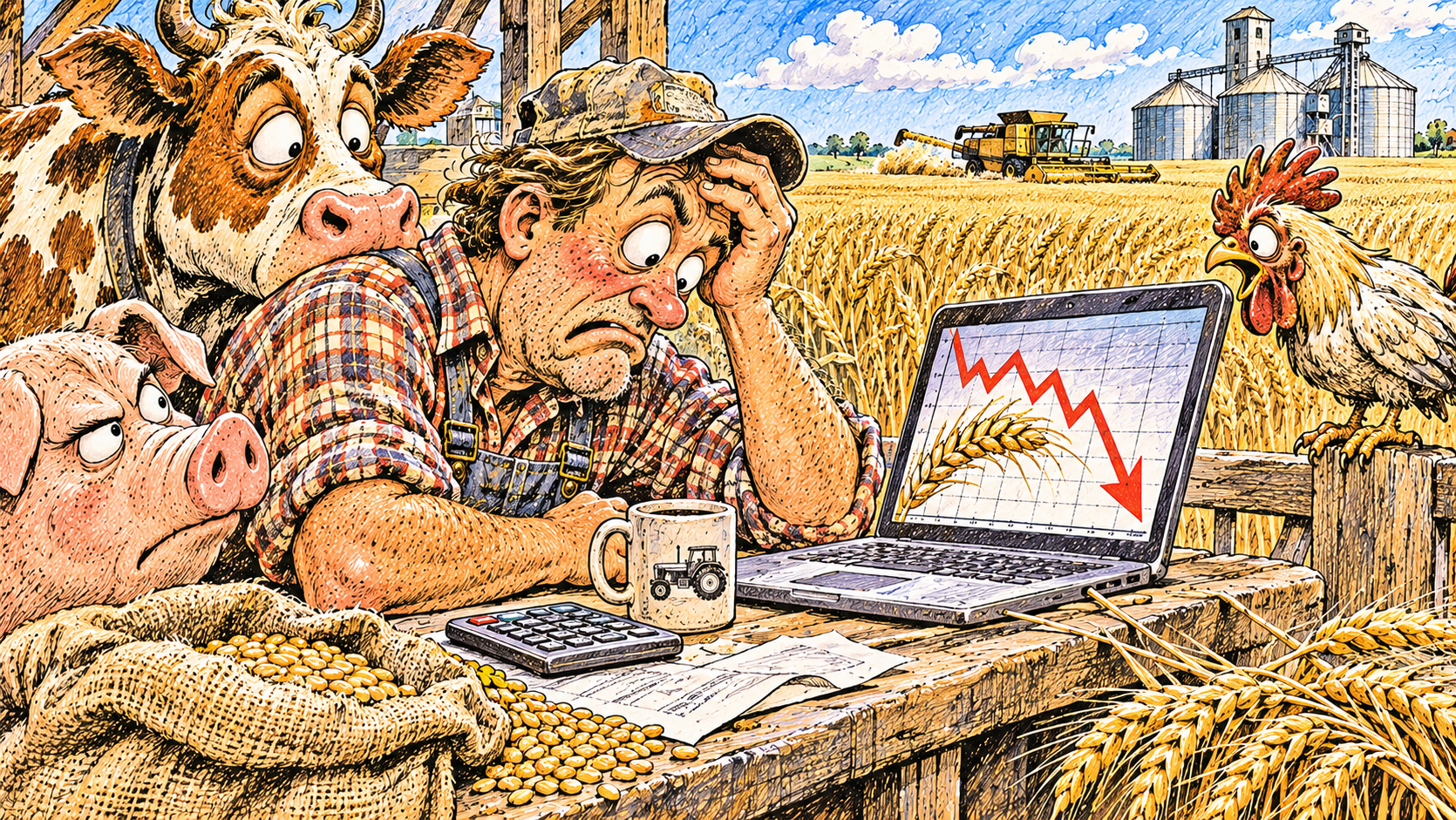
Farmers Discover Toast Pays Better Than Grain
WICHITA, Kansas – Kansas wheat farmers have uncovered an agricultural contradiction: the grain that becomes bread, breakfast cereal and restaurant toast gets less valuable the closer it sits to the person who actually grew it.
According to the U.S. Wheat Associates weekly wheat price report, American wheat futures just logged their tenth straight weekly decline. December Kansas City hard red winter wheat finished near $6.33 per bushel, down eleven cents on the week. The USDA Economic Research Service wheat page keeps the long-run supply, demand and trade figures for anyone who wants to see how this movie ends.
Farmers responded by visiting grocery stores, where they learned that turning wheat into breakfast cereal somehow increases its emotional, cultural and financial significance.
One producer figured he could sell several pounds of wheat for a modest sum, but if he toasted it, flattened it, sealed it in a cardboard box and added a cartoon rooster, customers might pay enough to cover his mortgage. He lacked a cereal factory. He did own a combine that had just needed an $18,000 repair.
Kansas Wheat Farmers Investigate the Breakfast Industry
A group of local producers considered launching a new breakfast cereal called Financial Despair Flakes. Each box would hold genuine Kansas wheat, a complimentary bank statement and a small plastic farmer trying to escape an adjustable-rate loan. The slogan: “Start Your Morning the Same Way We Do, Already Behind.”
A marketing consultant turned the idea down. Research suggests American consumers prefer breakfast products that promise happiness, energy or improved digestion. The farmers argued that financial despair was considerably more authentic.
Another producer proposed selling individual slices of wheat toast at fashionable urban restaurants. He had learned that people sometimes pay impressive sums for toast decorated with avocado. By his math, a bushel sold as toast at $14 a slice and roughly forty slices to the bushel grosses $560, against the $6.33 the elevator is paying. After reviewing the numbers, he concluded that the industry’s biggest mistake was selling wheat instead of selling the privilege of looking at it.
“Apparently the money isn’t in growing breakfast,” he said. “It’s in putting breakfast on a wooden board.”
A server at a Wichita brunch spot, Tamsin Bell, recalled a customer in a seed-company cap who ordered the $14 toast, ate half and then stared at the other half “like it owed him money.”
Wheat Prices Explained: Why Farmers Are Told to Stay Calm
Agricultural economists note that wheat prices depend on global production, export competition, currency movements, transportation costs and inventories. Kansas producers say they understand all of that. They just wonder why every one of those factors ends in the same place: the farmer gets less money.
Meanwhile, restaurants keep charging for bread, supermarkets keep selling expensive cereal and bakeries keep telling people that handmade sourdough is an artisanal experience. Farmers insist wheat cultivation is also an artisanal experience. It involves land preparation, planting, fertilizing, pest management, harvest, hauling, financial risk and the occasional prayer while staring at a weather radar. Unlike baking sourdough, though, nobody has convinced customers to pay $14 for a photograph of the process.
A call placed by one grower to a national cereal maker’s consumer line went like this, according to his own notes:
Farmer: “How much do you pay for the wheat that goes in the box?”
Representative: “I can transfer you to our Consumer Comments line.”
Farmer: “I’m a producer.”
Representative: “Is that a comment?”
Kansas Farmers Demand Recognition as Breakfast Artists
One county agricultural committee suggested farmers start marketing their fields as interactive food experiences. Visitors would pay admission to stand next to wheat, contemplate carbohydrates and appreciate the emotional difficulties of agricultural production. For an extra fee, customers could ride a combine and find out why the owner looks fifty years older than his driver’s license photo.
The premium package includes a thirty-minute consultation with a grain merchandiser explaining basis, futures contracts and how a profitable harvest can turn into a disappointing checking account. The committee believes the concept could outperform actual grain production.
A veteran Kansas grower offered a simpler suggestion. “Maybe people could just pay enough for wheat that we don’t have to become entertainers.”
His proposal was dismissed as economically unrealistic. After all, the country needs affordable bread. And apparently the one person who can be expected to provide it without making money is the farmer.
Five Observations on Wheat, Toast and Cereal Boxes
- Wheat’s at a four-month low and toast is at an all-time high. Same plant. One of them has a lawyer.
- Fourteen dollars for toast. For that money the bread should come with a résumé and a reference.
- Think about the cartoon rooster. He doesn’t grow anything. He doesn’t pay for anything. He’s got an agent and a breakfast. Meanwhile the farmer’s got a combine note.
- “Is that a comment?” That’s a company that has never had a conversation with a human being it didn’t plan to get something from.
- A farmer can go his whole life never charging for a photograph of the process, and then one guy with a ring light and a loaf of sourdough is a millionaire. I can’t compete with a ring light.