
Close Enough to Hear About the Next Breakdown
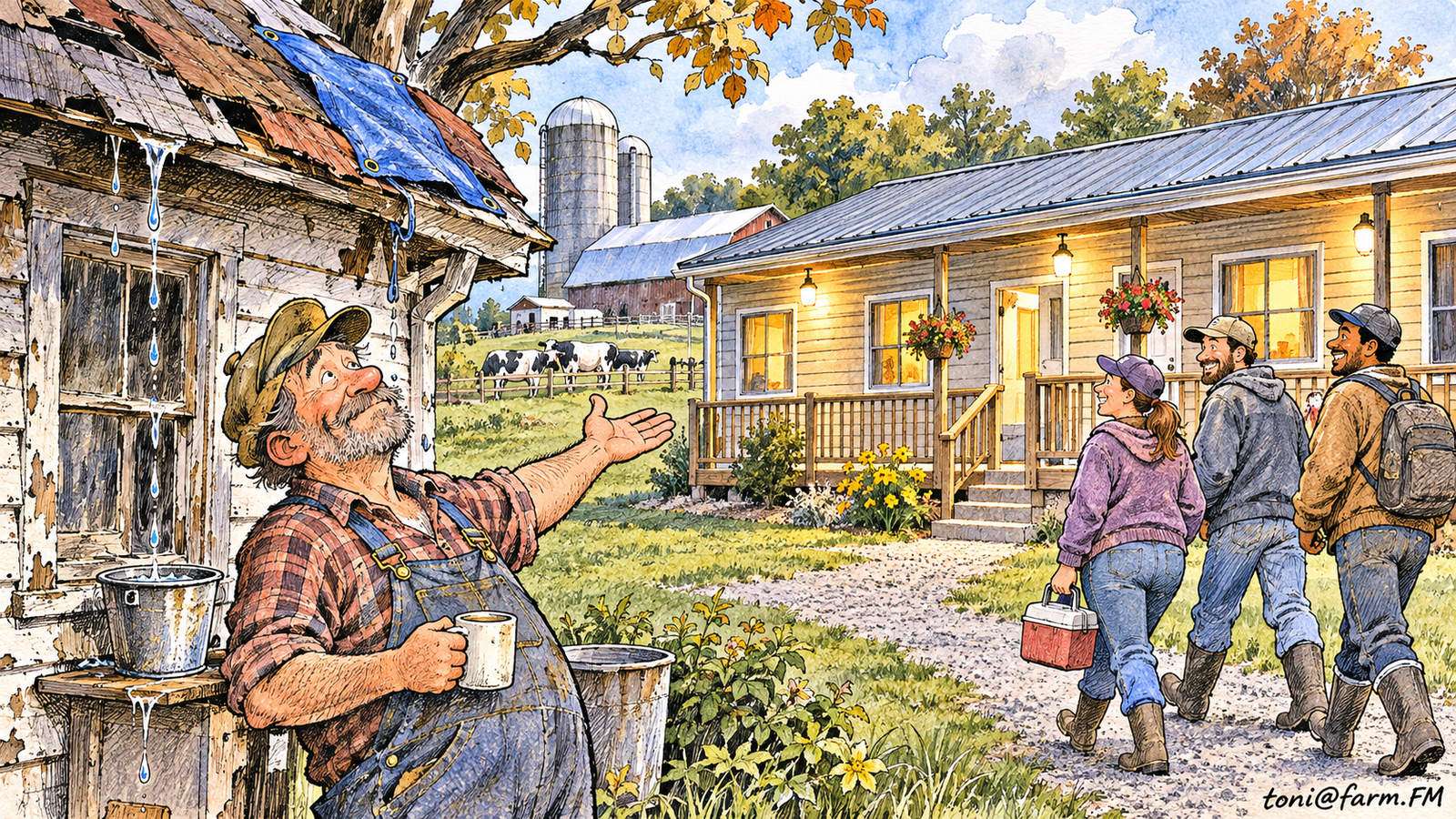
ITHACA, N.Y. (Farm.FM) — Dairy farm worker housing has become the only real estate market where the employer spends a fortune building apartments so employees can live close enough to discover another broken water line before breakfast.
Farm owner Rosa Delgado priced a modest renovation to existing worker housing, then compared the estimate with the farmhouse she had been patching since 1998. The new quarters would have sound windows, reliable heat and plumbing that did not require a motivational speech every January.
“Apparently the answer to good housing is to avoid being the person who owns the farm,” Rosa said. Her husband agreed while placing another bucket beneath the kitchen sink.
You Can’t Milk Cows Through a Video Call
Dairy staffing is a constant practical challenge because cows require care every day. Access to safe, decent housing can help attract and retain workers in rural locations where rental options may be limited. Housing, however, is not just a line item: it is a place where people live, raise children and recover from demanding shifts.
The USDA Rural Development On-Farm Labor Housing Loans program offers eligible borrowers financing to develop or rehabilitate affordable farmworker rental housing. Eligibility, applications and funding availability matter, so announcing a program is not the same as depositing a construction check in Rosa’s bank account.
For applicable H-2A employment, the U.S. Department of Labor’s guidance requires qualifying employers to provide compliant housing at no cost to covered workers and to follow other worker protections. A June 2026 clarification explained by Cornell Agricultural Workforce Development allows qualifying temporary or seasonal dairy positions to be considered under H-2A; it does not turn ordinary permanent dairy jobs into seasonal jobs just because somebody wishes they were.
Rosa’s consultant proposed solving the problem with a recruitment video showing happy employees near picturesque barns. She pointed out that a video could not keep anyone warm in February. The consultant offered to add a filter.
A Roof Doesn’t Pay for Itself
At a dairy association meeting, a neighbor suggested workers could simply commute from the nearest city. Rosa asked whether the neighbor had ever driven that road through an ice storm at 3 a.m. He said no, because he worked in insurance and arrived at nine. The room concluded he had successfully identified the problem without meeting it.
Responsible planning includes housing quality, costs of upkeep, local building standards, fair recruitment practices, worker privacy and clearly explained employment terms. Reliable housing benefits workers; stable staffing also supports animals and the business. None of that becomes less important because the farm owner’s own roof leaks.
After the renovation estimate arrived, Rosa decided to tackle the employee housing properly and put her own kitchen roof back on next year’s list. The electrician called to report the barn’s heater needed replacing.
“Put it on the list,” Rosa replied. “Right above retirement and just below the cows.”
Editorial disclaimer: The farm characters and conversations are satirical; linked agricultural research and program requirements are real. This story is entirely a human collaboration between two sentient beings, the world’s oldest tenured professor and a philosophy major turned dairy farmer.