
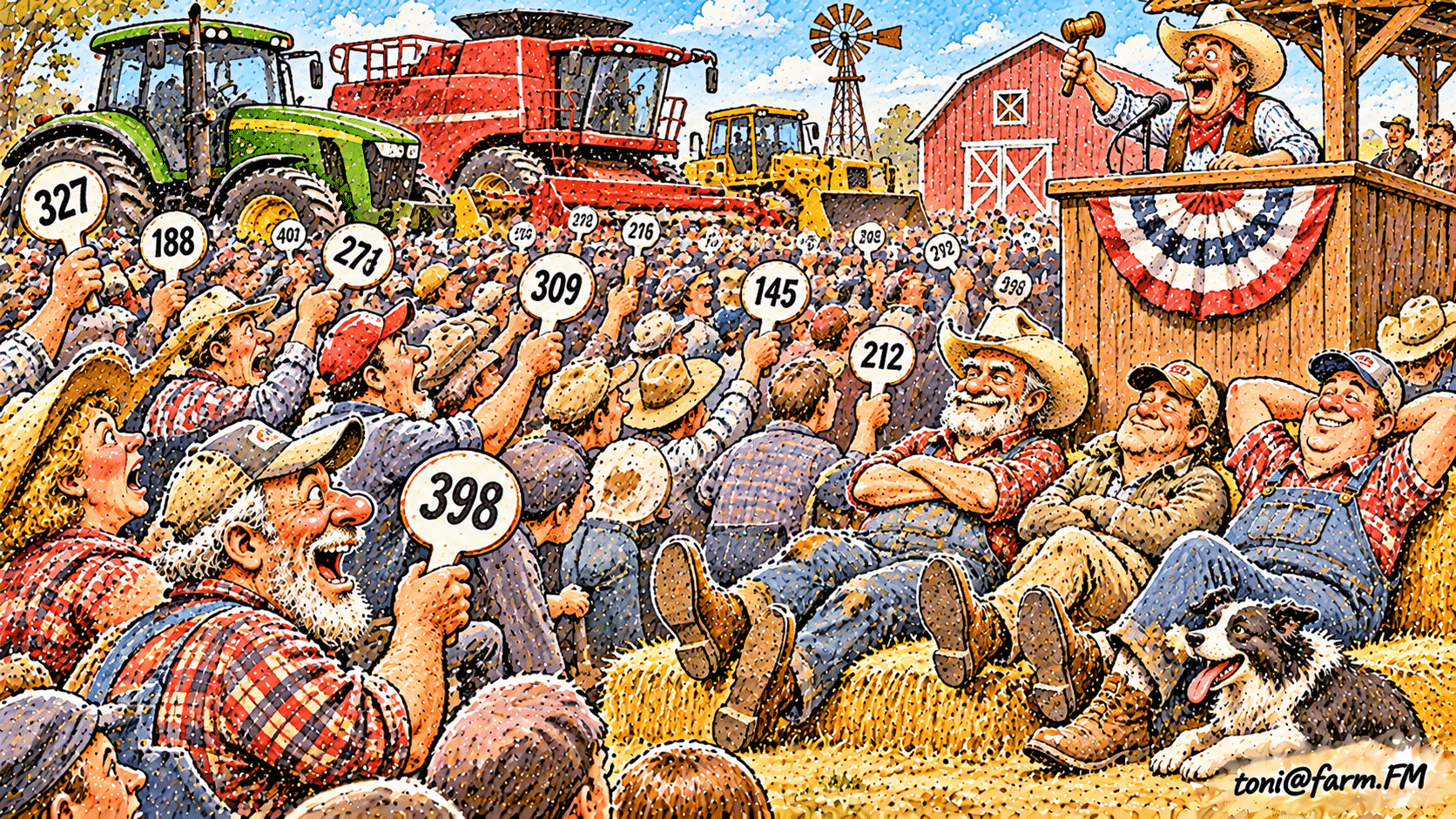
Four Hundred Bidders and Three Working Farmers
DES MOINES, Iowa (Farm.FM) — A farm equipment auction drew four hundred enthusiastic bidders on Saturday, including antique collectors, investment advisers, two men who thought the combine was an RV, and three farmers who could still afford to farm.
The event opened with a 1987 tractor described as “field-ready,” meaning the field was ready but the tractor wanted another winter off. It sold to a software executive who said its faded paint gave his weekend acreage an authentic working-class atmosphere.
“I came to buy a replacement grain cart,” said soybean farmer Earl Denton. “Some fellow in loafers paid twice my limit because the rust matched his outdoor kitchen.”
The auctioneer called the result a triumph for rural economic development. Denton called it the first time anybody had described bankruptcy prevention as a losing bid.
Farm Equipment Auction Turns Old Iron Into Luxury Collectibles
A weathered planter attracted attention when a lifestyle influencer announced that its seed boxes could hold artisanal succulents. Two bidders then competed for a broken baler because one of them planned to turn it into a wedding-photo backdrop.
A dealer explained that serious buyers evaluate maintenance history, engine hours, tire condition, parts availability, transport costs, and whether an implement actually fits their operation. The influencer asked whether those features were available in matte black.
There is a genuine financial reason for farmers to inspect machinery carefully. Iowa State University Extension’s guide to estimating farm machinery costs accounts for ownership expenses such as depreciation and interest as well as operating expenses including fuel, repairs, and labor. An attractive hammer price can become an ugly annual bill.
Denton attempted to explain this to a collector bidding on a sixty-foot field cultivator for his suburban driveway. The collector asked if it could be folded into a decorative privacy screen.
The Auctioneer Discovers a New Species of Buyer
The last remaining farmers clustered near the coffee urn, where the budget was still negotiable. They discussed hydraulic leaks, cracked tires, and the probability that a machine advertised as “ran when parked” had been parked by a man running away.
Farm Equipment Auction Meets the Real Cost of Harvest
Actual machinery expenses have risen with fuel, repairs, and equipment ownership costs. In a September 2026 Iowa State Extension analysis of harvest machinery costs, higher diesel prices materially increased the cost of operating combines and other harvest equipment. Farmers cannot pay an auction invoice with nostalgia; they need machinery that works economically.
Denton eventually bought a plain grain cart with sound tires. It attracted little competition because nobody could imagine featuring it beside a swimming pool.
The software executive bought three tractors, a cultivator, and a sign promising visitors a rustic experience. He asked Denton when planting season began. Denton answered, “Usually right after your bank learns what parts cost.”
By Sunday, all three working farmers had gone home with something useful. The remaining bidders had purchased enough agricultural atmosphere to qualify for a boutique hotel.
The auctioneer announced record enthusiasm for farming. Nobody asked him how much of the crowd intended to grow food.
Disclaimer: The auction, participants, prices implied by the bidding, and quotations are satirical. The linked agricultural machinery cost research is factual. This story is entirely a human collaboration between two sentient beings: the world’s oldest tenured professor and a philosophy major turned dairy farmer.