
Ranch to Table Restaurant Diners Pay Extra for the Steer’s Life Story
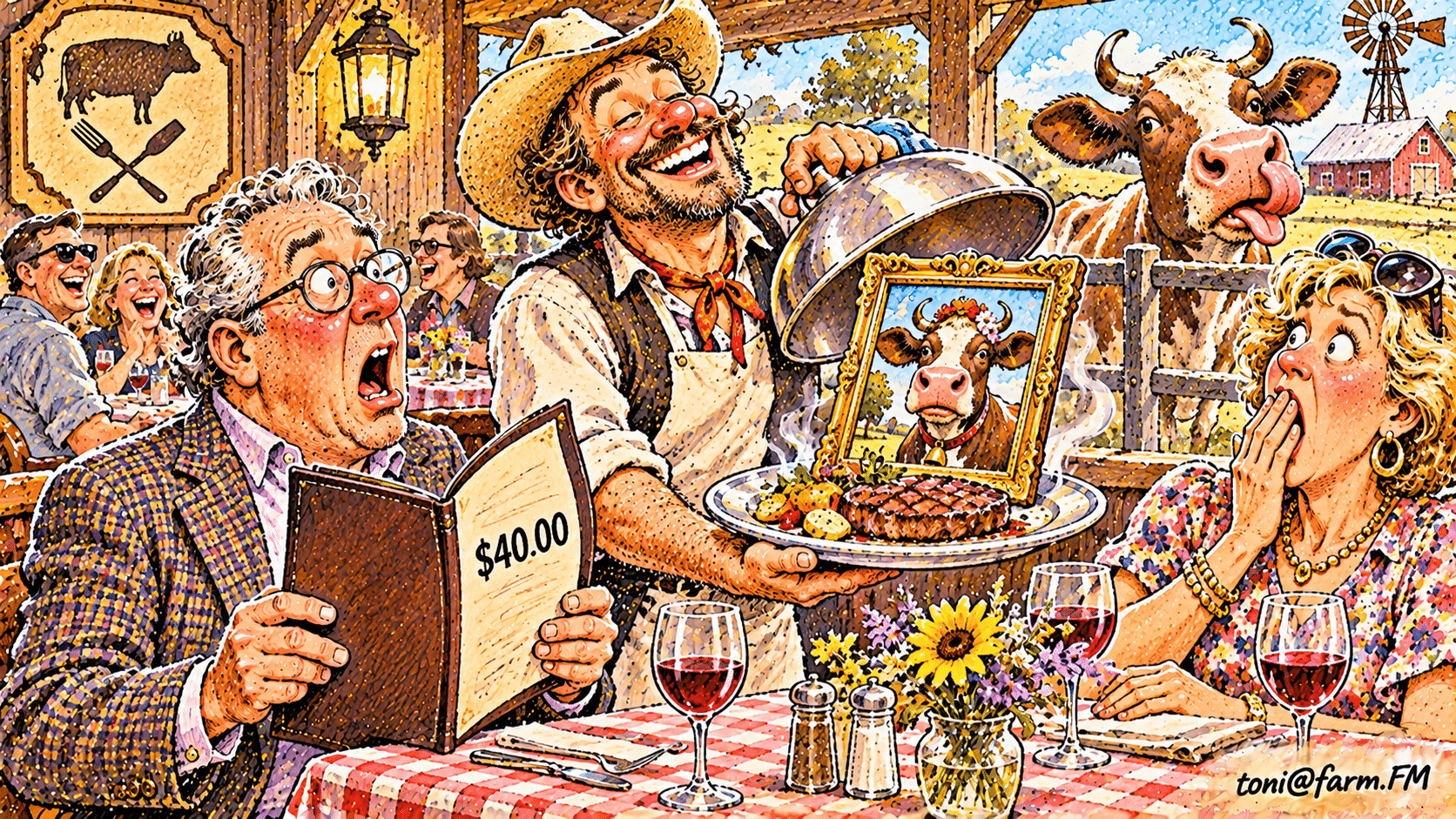
FORT WORTH, Texas (Farm.FM) — A new ranch to table restaurant has introduced a forty-dollar storytelling supplement that allows diners to learn the name, hobbies, and alleged emotional ambitions of the cow involved in their steak dinner.
The restaurant, Pasture & Pretension, says customers increasingly want transparency about where meat comes from. Its solution is a leather-bound biography, a candlelit reading, and a fee that doesn’t appear to travel all the way back to the ranch.
“We believe every steak has a story,” explained dining director Bradley Fincher. “For an extra twenty dollars, we’ll tell it with a violin.”
Local cattle producer Martha Keene asked whether her side of the story could include last winter’s feed bill. Fincher said the restaurant preferred uplifting narratives.
Ranch to Table Becomes Table to Invoice
The premium menu describes one steer as adventurous, collaborative, and deeply connected to the land. Keene remembered him primarily as difficult to load.
A couple celebrating their anniversary purchased the deluxe Meet Your Meat package and were shown a photograph of a field. They asked whether the steer had enjoyed music. The waiter replied that a consultant was researching its favorite playlist.
Keene suggested the restaurant play the sound of a feed truck arriving. That, she said, would have been the animal’s number-one song.
Farm-to-consumer connections are real. USDA agritourism research documents revenue from on-farm entertainment and hospitality, illustrating why producers increasingly seek extra income and direct relationships with customers.
What they cannot do is guarantee the rancher earns forty dollars every time someone tells a charming story about a pasture.
The Rancher Gets Paid in Exposure
Keene asked whether she could receive a share of the storytelling charge. Fincher offered to tag her ranch in a social-media post.
“My cows eat hay,” she said. “Can I pay the hay supplier with exposure?”
The restaurant’s next innovation was a Regenerative Conversation Fee, added whenever a waiter discussed soil. A customer who asked for ketchup was charged a Flavor Heritage Consultation. Another diner who requested the check was directed to a mindfulness exercise about accepting abundance.
A manager defended the concept by explaining that modern urban consumers appreciate thoughtful connections to food. Keene agreed. She simply wanted those connections to include people who haul feed, manage land, and work the livestock.
The wider economic pressure on producers is documented: USDA forecasts inflation-adjusted net farm income to fall 5.5 percent in 2026. Turning an ordinary origin story into a luxury add-on does not reverse that forecast.
After dinner, Fincher offered Keene a complimentary dessert in exchange for a brief account of her ranching journey.
She gave him the shortest version available: “We raise cattle. They cost money. You sell steaks. Apparently the adjectives cost extra.”
He asked if she could repeat it in a more inspirational tone.
She sent him an invoice.
Disclaimer: The restaurant, fee schedule, characters, and quotations are satirical. USDA context about farm economics and direct-to-consumer activity is real. This story is entirely a human collaboration between two sentient beings: the world’s oldest tenured professor and a philosophy major turned dairy farmer.