
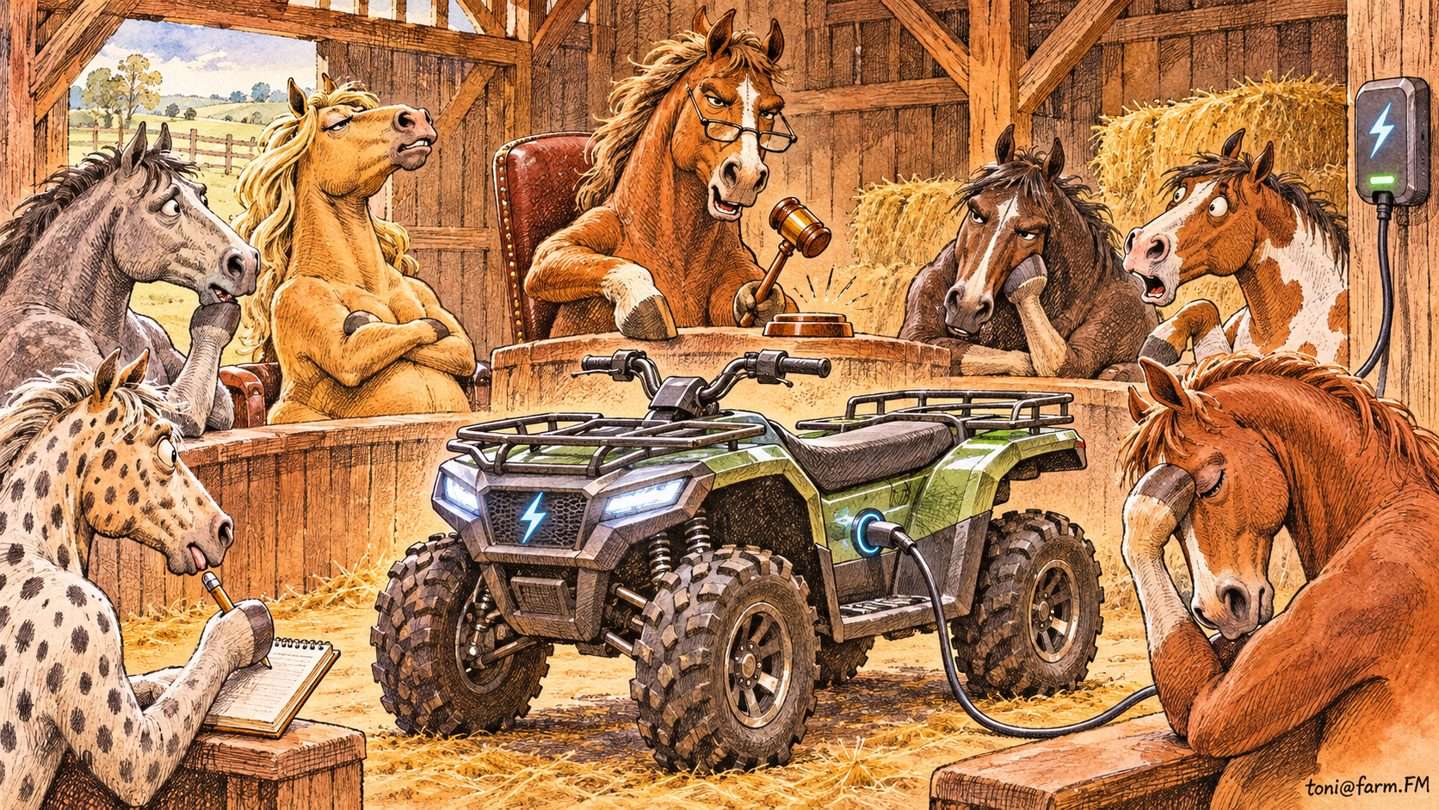
PALO PINTO, Texas — The arrival of an electric ATV has prompted horses at a North Texas ranch to call an emergency meeting near the tack room. Their findings were unanimous once the gelding by the hay rack quit chewing long enough to be counted. The vehicle has no soul, the horses said, and does a suspiciously poor job of looking guilty after going through a gate somebody left open.
“I drove past the paddock quietly enough to hear the horses thinking,” rancher Ted Raines said. “I believe one of them was thinking I still owed him breakfast.”
Electric ATVs on Ranches Face Equine Review
The committee assessed the new vehicle on three criteria. It could carry tools, it had no appetite for oats, and under no circumstances did it recognize a carrot as a good-faith negotiating gesture. The horses regarded the third point as decisive. The ranch foreman asked why the committee had eaten the evidence. The committee issued another unanimous vote to move on.
Raines bought the machine to check a few fences and carry stakes. His horse, Harriet, did those jobs for years with occasional interruptions to stare at objects nobody else could see. The electric vehicle has its own interruption pattern. It lights up and tells him to pay attention to a little bar, which he says has less personality than Harriet but a better record of admitting something is wrong.
Neighbor and rancher Ellie Sosa has both a horse and an ATV. She uses each for tasks it suits, but says the horse makes a better case for promotion by putting its ears back whenever she mentions the other candidate.
“I borrowed his trailer to take the ATV to the dealer,” Sosa said. “You’d have thought I’d brought another horse home in his wedding clothes.”

A Work Vehicle Still Has to Fit the Job
The Montana State University Extension material on ATVs and livestock discusses vehicle use around animals. Raines chooses the tool for the terrain and the work, plans around the machine’s available range and keeps unfamiliar traffic away from excitable stock. The horses insist that any vehicle taken around their fence ought to slow down sufficiently for them to determine whether it is carrying feed.
Rancher Walt Fraley wrote down what he used his machine for over a week. Three trips were legitimate chores and one was to show his brother how quiet it was. He backed out of a fifth trip after remembering his brother lives seven miles away and would make him explain what it cost.
“The horse can hear his feed bucket from the other end of the pasture,” Fraley said. “The ATV doesn’t even acknowledge me unless I push a button. I’ve got relatives with more range than that.”
Raines eventually moved the charger away from the tack room. The horses called the move a victory. Harriet was later seen using the parked vehicle’s mirror to inspect herself, which the committee described as independent research.
Farm.FM satire disclaimer. The horses declined to file minority views. Two submitted an additional request for carrots.