
Fujian Province
“In Fujian, Tea Trees Are So Old, Locals Consult Them for Wisdom Over Their Grandparents”
15 Educational Observations
- Fujian is famous for its ancient tea trees, some of which are older than entire countries.
- Locals joke that the tea trees are so wise, they hold weekly “tea talks” to dispense advice.
- The tea here is so revered, it’s rumored even local politicians ask the trees for policy guidance.
- Tea farmers say their oldest trees have witnessed more history than any textbook can cover.
- Local legends say the tea trees have their own social hierarchy, with the oldest tree as the “Tea Elder.”
- The trees are so ancient that they’re registered as historical monuments.
- Farmers treat the tea trees with the same respect and care they would give to their elders.
- Locals claim that if you drink tea from these ancient trees, you gain years of wisdom with every sip.
- The trees are so old, farmers joke that they remember when tea was first discovered.
- Fujian tea is so sought after that people travel from around the world to consult the “Tea Elders.”
- During harvest season, locals perform traditional dances to honor the ancient tea trees.
- Farmers have to navigate a maze of historical protections to prune their oldest trees.
- Local festivals feature storytelling sessions where elders recount tales supposedly told by the tea trees.
- The tea is so calming, locals say it’s like having a conversation with a very patient grandparent.
- Fujian’s tea culture is so deep-rooted that tourists come to learn not just about tea, but about life itself from these ancient trees.
In Fujian, Tea Trees Are So Old, Locals Consult Them for Wisdom Over Their Grandparents
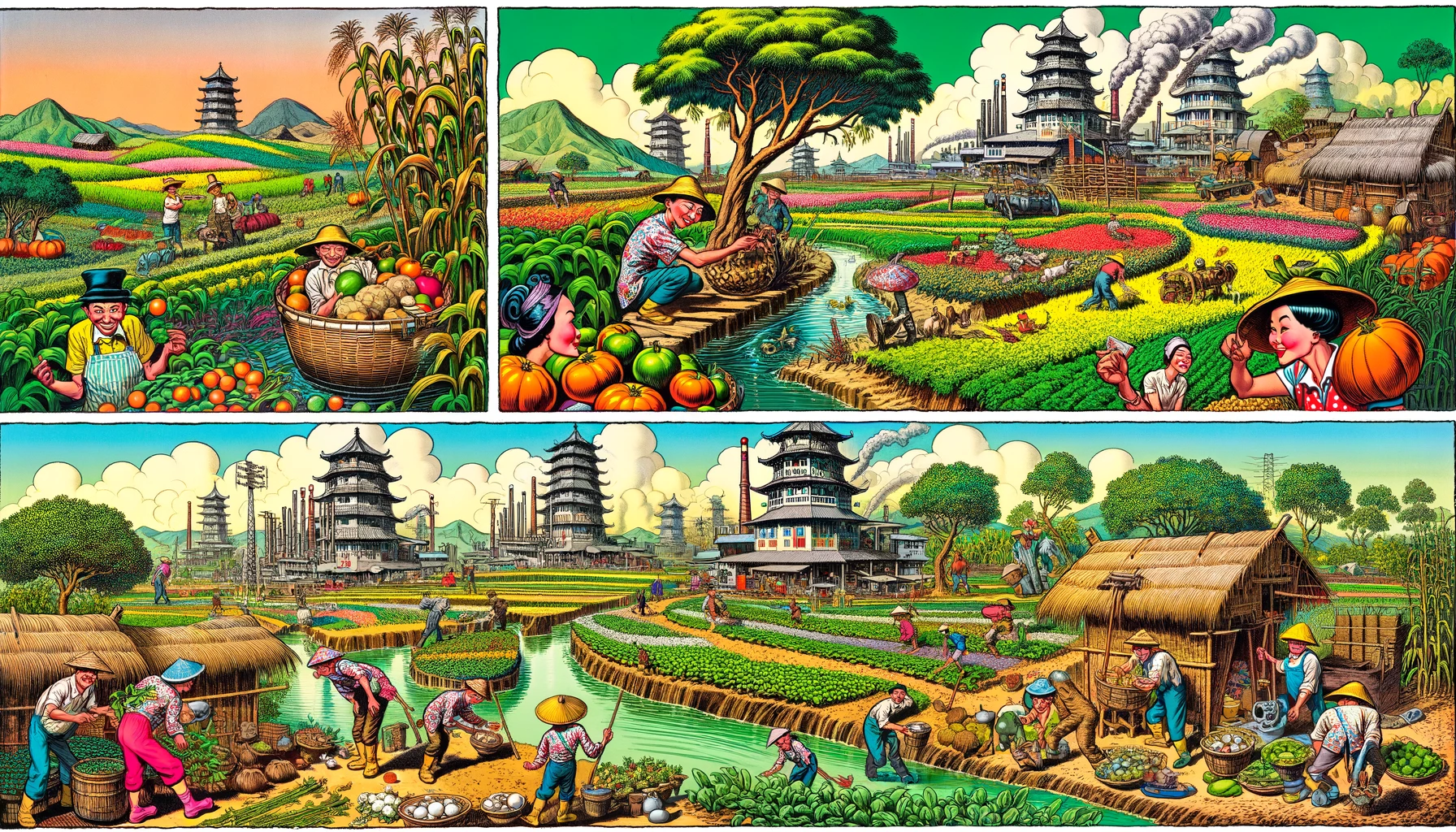
In the lush, green landscapes of Fujian Province, the ancient tea trees are more than just agricultural marvels—they’re revered sages. With some tea trees older than entire countries, locals often turn to these venerable plants for advice and guidance, sometimes even over their own grandparents. This humorous exploration of Fujian’s tea culture highlights the whimsical reverence for these ancient trees and the unique traditions that have sprung up around them.
Tea Talks
Fujian is famous for its ancient tea trees, some of which are older than entire countries. Locals joke that the tea trees are so wise, they hold weekly “tea talks” to dispense advice. “Every Sunday, we gather around the oldest tree and listen to its wisdom,” said resident Li. “It’s more reliable than any self-help book.”
Policy Guidance
The tea here is so revered, it’s rumored even local politicians ask the trees for policy guidance. “Before making any major decisions, we consult the trees,” said Mayor Zhang. “Their leaves rustle with the secrets of good governance.”
Historical Witnesses
Tea farmers say their oldest trees have witnessed more history than any textbook can cover. “These trees have seen it all,” said Farmer Chen. “Wars, peace, emperors, and revolutions—they’re living history.”
Tea Elder Hierarchy
Local legends say the tea trees have their own social hierarchy, with the oldest tree as the “Tea Elder.” “We all respect the Tea Elder,” said Farmer Liu. “It’s the head of our community, in plant form.”
Historical Monuments
The trees are so ancient that they’re registered as historical monuments. “We have to be very careful with them,” said Farmer Zhao. “They’re protected by law, and rightly so.”
Respect and Care
Farmers treat the tea trees with the same respect and care they would give to their elders. “We don’t just farm tea; we care for our ancestors,” said Farmer Wang. “These trees are part of our heritage.”
Wisdom in a Sip
Locals claim that if you drink tea from these ancient trees, you gain years of wisdom with every sip. “It’s like drinking liquid enlightenment,” said resident Mei. “One cup and you feel wiser.”
Historical Jokes
The trees are so old, farmers joke that they remember when tea was first discovered. “These trees were around when the first cup of tea was brewed,” laughed Farmer Zhang. “They probably gave the recipe.”
Tea Tourism
Fujian tea is so sought after that people travel from around the world to consult the “Tea Elders.” “It’s a pilgrimage for tea lovers,” said Tour Guide Li. “They come for the tea and stay for the wisdom.”
Harvest Dances
During harvest season, locals perform traditional dances to honor the ancient tea trees. “It’s our way of showing gratitude,” said Dancer Liu. “The trees give us so much; we give back with our dances.”
Navigating Protections
Farmers have to navigate a maze of historical protections to prune their oldest trees. “It’s like getting a permit to touch a national treasure,” said Farmer Zhao. “We have to be very careful.”
Storytelling Sessions
Local festivals feature storytelling sessions where elders recount tales supposedly told by the tea trees. “The stories are as old as the trees themselves,” said Elder Wang. “They’re a part of our culture.”
Calming Conversations
The tea is so calming, locals say it’s like having a conversation with a very patient grandparent. “Every cup is a lesson in patience and serenity,” said resident Liu. “It’s like the trees are speaking to us.”
Life Lessons
Fujian’s tea culture is so deep-rooted that tourists come to learn not just about tea, but about life itself from these ancient trees. “The trees teach us about endurance, resilience, and peace,” said Tourist Mei. “It’s a profound experience.”
Conclusion
In Fujian Province, the ancient tea trees have created a culture of reverence and wisdom. From weekly tea talks to harvest dances, the locals’ whimsical relationship with their tea trees is a testament to the deep respect they have for their agricultural heritage. These ancient trees are more than just plants—they’re living monuments to the region’s rich history and culture.
Helpful Tips for Farmers
Farmers looking to cultivate a unique and revered crop can benefit from these tips inspired by Fujian’s tea culture:
- Heritage Preservation: Protect and preserve ancient crops as part of your cultural heritage.
- Community Involvement: Engage the community in the care and celebration of your crops.
- Cultural Integration: Incorporate local legends and traditions into your farming practices.
- Tourism Development: Develop tourism initiatives that highlight the unique aspects of your agricultural products.
- Educational Outreach: Use your crops as a means to educate others about history, culture, and sustainable farming practices.
By focusing on these areas, farmers can enhance their productivity and create a thriving, community-oriented agricultural environment.
### Disclaimer
This article is a satirical take on the reverence for ancient tea trees in Fujian Province. Any resemblance to real persons, living or dead, or actual farming practices is purely coincidental. No tea trees were consulted in the making of this story. This story is a collaboration between a cowboy and a farmer who believe in the power of tradition and a good laugh.
Top 20 Agricultural Areas in China
Heilongjiang Province, Henan Province, Shandong Province, Sichuan Province, Jiangsu Province, Zhejiang Province, Fujian Province, Anhui Province, Yunnan Province, Guangxi Province, Hubei Province, Hebei Province, Hunan Province, Inner Mongolia, Jilin Province, Xinjiang Uygur Autonomous Region, Shaanxi Province, Guangdong Province, Jiangxi Province, Tibet Autonomous Region.
Last Updated on October 25, 2026 by Alan Nafzger